Now

AI for the questions
the internet can’t answer
We are a geometric deep learning lab building foundation models that inherit the symmetries of physical law, trained on high-fidelity simulation data we create in house. Our models turn hours of simulation into seconds. We are currently focused on aerodynamics and defense.
Angle of attack
Lift coefficient
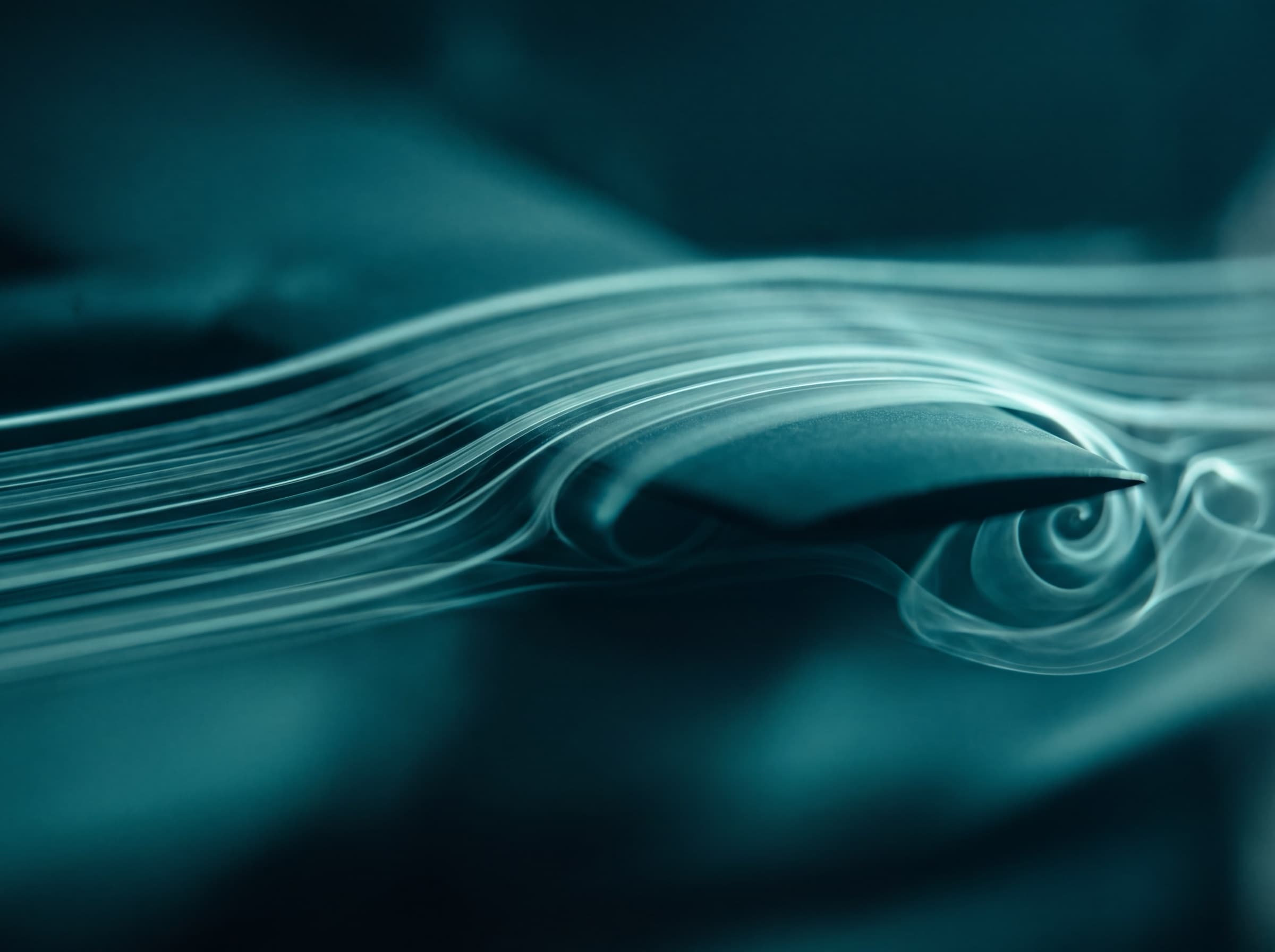
A NACA 0012 wing at Reynolds number 10,000, in the averaged flow from our own simulations. Move the slider to pitch the wing. The flows that matter have no closed form. We learn them.
156,000×
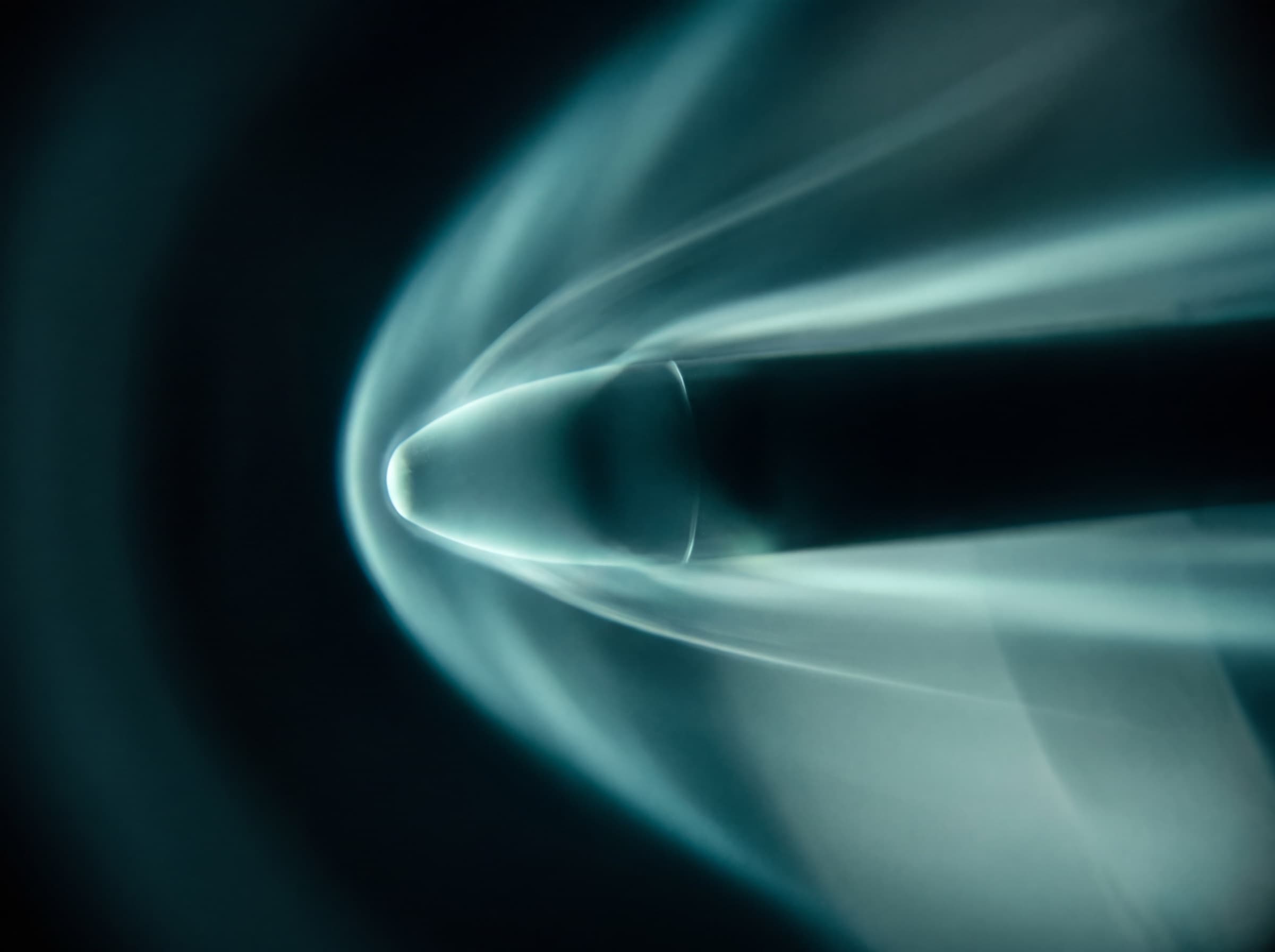
Faster. A 130-hour simulation of NASA’s Orion capsule at Mach 5 now takes under 3 seconds, compared with the standard method (CFD). Run on two H100 nodes.
Read the paper440,000+
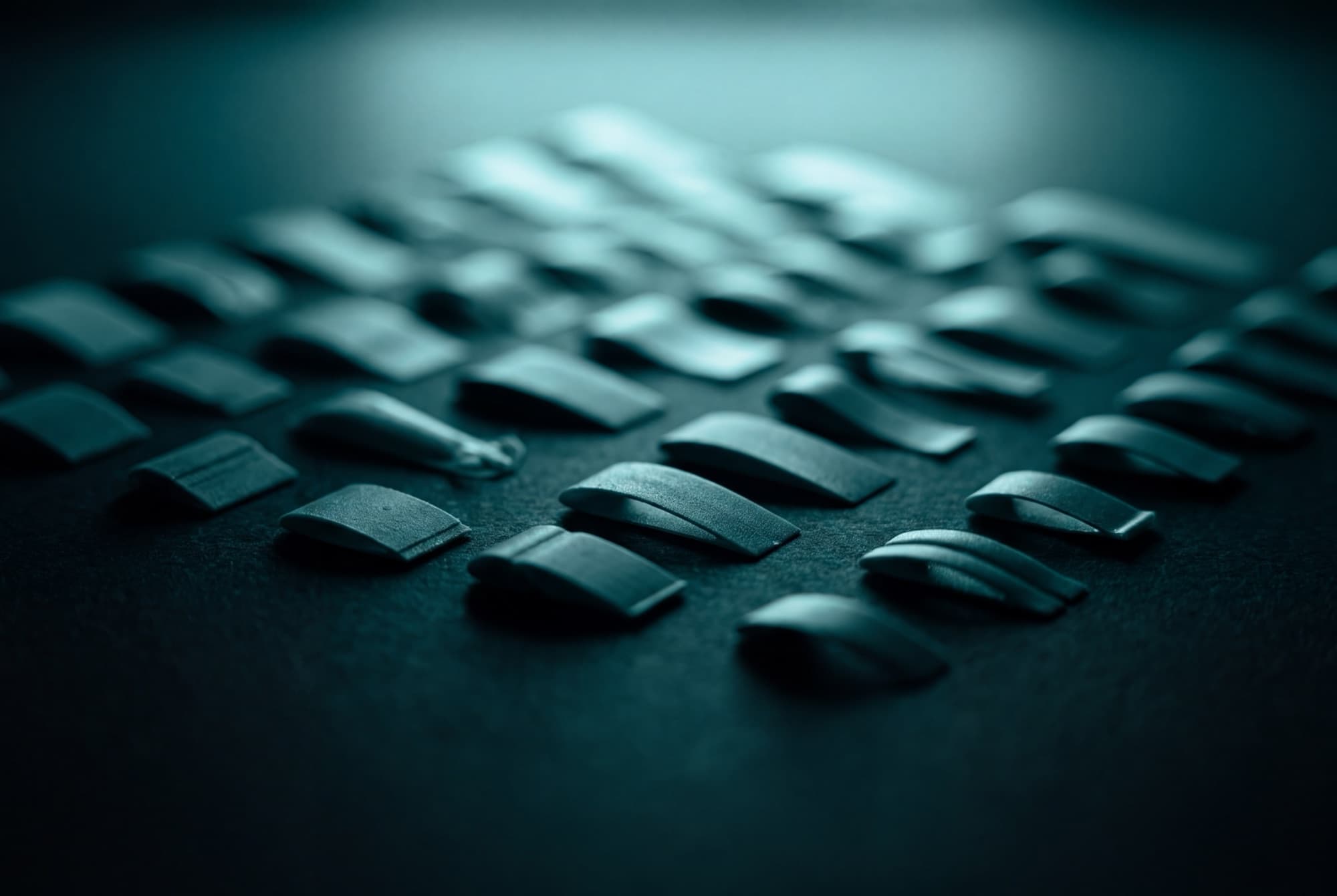
ILES & RANS simulations of wings across 10,000+ geometries, 11 angles of attack and 12 Reynolds numbers.
Explore the datasetPhysics has no internet.
We are building it.
Data
Language models learned from text that already existed online. The data physical AI needs, how fluids flow and how structures behave, was never put online at scale. We generate it ourselves with high-fidelity simulation.
Symmetry
Physics has structure: it holds the same when a system moves or rotates. Our models are built to respect it, so they need less data and generalise further.
Speed
Classical solvers take hours or days per design. Our models predict the flow in seconds, so engineers can test hundreds of designs instead of a handful.
Open
We publish as we go: papers, datasets, and model weights as each release is ready.
What we build
Simulation data, models, evals.
Built to order.
Data
Every case comes with its setup.
CFD simulation data made to order, at the scale a model needs and from fast RANS runs up to high-fidelity simulation. Every case records its solver, mesh, boundary conditions and convergence, so you know exactly how it was made.
Models
Answers in seconds.
Physics models trained on your designs and operating conditions, or adapted from ours. They respect the structure of physics, so they learn more from less data and hold up on designs they haven’t seen.
Evals
A solver is the judge.
We test any physics model, ours or anyone else’s, against fresh solver runs it has never seen, and show exactly where it holds and where it breaks. Public benchmarks and private tests.
Deployment
Runs inside your walls.
In your cloud, on your own servers, or fully offline (air-gapped). Outside the range it was tested on, the model hands the question to a solver, so every answer stays within what was tested.
Design search
Try thousands of designs.
Our models run inside your optimization process. Test thousands of shapes in the time one standard simulation takes, then confirm the shortlist with a solver.
Working today in aerospace and defense.
Now
Defense
Our research
Models, data and papers
- DatasetPaidAIRe Airfoil DatabaseWall-resolved ILES and RANS simulations of NACA and non-NACA airfoils across flow regimes, in HDF5 and Parquet.420,406 Cases500–30M Reynolds11 Angles
- ModelIn trainingRatio-AeroOur first aerodynamics model. It predicts the airflow around wings, aircraft and spacecraft. Weights and test results will be posted here when training finishes.ratiolabs/ratio-aero
- DatasetDownforce AirfoilsRANS simulations of inverted NACA 4-digit airfoils for automotive and motorsport aero.ratiolabs/downforce-airfoils
- DatasetReentry CapsuleTen steady, laminar, compressible simulations of NASA’s Orion reentry capsule at Mach 5, at angles from 0° to 45°.
- BenchmarkLiveAirfoils BenchExplore more than 200,000 ILES and RANS airfoil simulations in your browser: forces, surface pressure, skin friction and flow fields for every case.
- PaperAn Atlas of Airfoil Aerodynamics Using Wall-Resolved ILES/RANS Across Flow RegimesOver 440,000 airfoil simulations from Reynolds number 500 to 30 million, combining high-order ILES and RANS, browsable as an interactive atlas.papers.ssrn.com
- PaperSpectral Geometry-Conditioned Neural Surrogate Models for Airfoil Aerodynamics and a Downforce-Generating CFD DatasetA spectral geometry encoder for airfoils, trained on about 10,000 RANS simulations of downforce wing sections, that generalises to shapes it has never seen.arxiv.org
- PaperLearning 3D Hypersonic Flow with Physics-Enhanced Neural Fields: A Case Study on the Orion Reentry CapsuleA physics-enhanced neural field surrogate for the Orion capsule at Mach 5 that captures high-speed compressible aerodynamics, 156,000× faster than CFD.arxiv.org

Follow ratiolabs on Hugging Face ↗ to get new weights and data the day they ship.
London · San Francisco
Team
Founders
- Jayden WatsonCEOLinkedIn ↗
- Christian AngermayerChairmanLinkedIn ↗
- Haitz Sáez de Ocáriz BordeChief ScientistLinkedIn ↗
Founding team
- Pantelis PapageorgiouMember of Technical StaffLinkedIn ↗
- Flavio SavarinoMember of Technical StaffLinkedIn ↗
- Lidia CarosMember of Technical StaffLinkedIn ↗
We run joint research with universities, labs and Enterprises.

 University of
Cambridge


We’re hiring
Work with us.
We’re hiring researchers and engineers in London and San Francisco. Pick the area closest to your work and send us something you have built, with the area in the subject line.
Machine learning and engineering 8
- Geometric deep learning Build models that understand irregular geometries, physical symmetries, and complex spatial relationships and make them useful for real-world engineering. Reach out
- Physics foundation models Build scalable foundation models that learn from high-fidelity physics simulations and generalize across geometries, flow regimes, and operating conditions. Reach out
- World models and robotics Connect physics foundation models to robotics and world modeling, with a focus on learning physically consistent representations of dynamic systems. Reach out
- Evals and environments Build scientific benchmarks and simulation-backed environments that rigorously establish where physics AI models work and where they fail. Reach out
- Optimisation Turn fast physics predictions into design optimization tools that explore engineering tradeoffs and verify promising candidate geometries. Reach out
- Data generation Build and operate the compute and data workflows that generate trustworthy simulation datasets for training physics foundation models. Reach out
Physics and simulation 2
Work with us
Tell us the question.
We will tell you if we can answer it, and what it takes.
Careers
Come build it.
We’re hiring researchers and engineers in London and San Francisco. Send us what you’ve built.